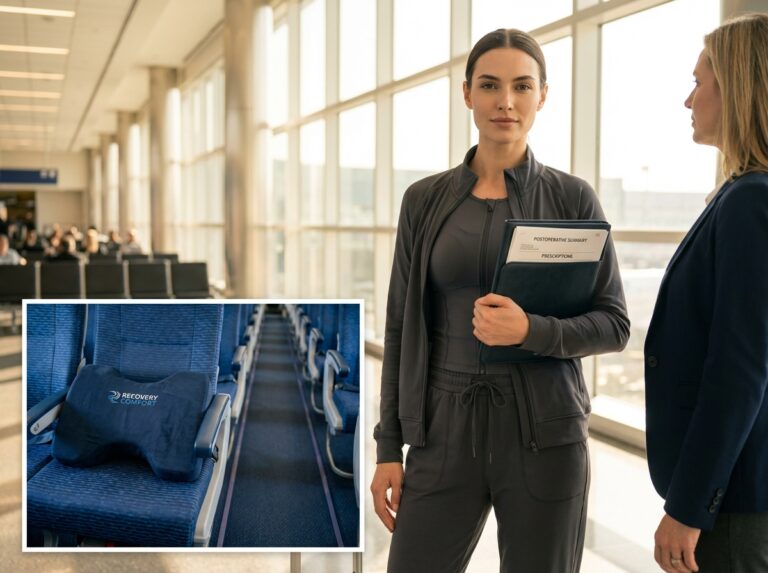
Traveling home after surgery abroad often means wearing a faja or other compression garment on a long flight. This guide explains how fajas differ from medical compression, when to get medical clearance, in‑flight safety steps to reduce complications like swelling and blood clots, and practical packing and communication tips to help you return safely and comfortably to the United States.
What is a faja and why it matters after surgery
After surgery, you’ll often hear the term ‘faja’ used almost interchangeably with ‘compression garment,’ but it’s important to understand the distinctions, especially when preparing for a long flight home. A faja, particularly the Colombian-style fajas popular in cosmetic surgery circles, is a high-compression shapewear garment designed for both aesthetic shaping and post-operative recovery. It differs significantly from medical-grade compression garments prescribed for conditions like lymphedema or graduated compression stockings designed specifically to prevent blood clots in the legs. While all apply pressure, they do so with different goals, materials, and designs.
Fajas are a cornerstone of recovery for many procedures. After an abdominoplasty (tummy tuck), liposuction, or other body contouring surgeries, a faja provides crucial support to healing tissues. For a Brazilian butt lift (BBL), its role is even more specialized. It must compress the areas where fat was harvested (like the abdomen and flanks) while leaving the buttocks uncompressed to protect the newly transferred fat grafts. This is a key difference from uniform compression garments. Fajas are also commonly used after abdominal repairs, like diastasis recti surgery, to provide external support to the core as it heals.
Most post-surgical fajas are constructed from robust, stretchable fabrics like Powernet, a nylon-spandex blend known for its strong compression and durability. They often feature a soft inner lining, like cotton, to protect your skin and incisions. The purpose of this intense compression is threefold. First, it provides physical support to skin and muscles, which can reduce pain from movement and help tissues adhere correctly. Second, it helps control postoperative edema, or swelling. The constant, firm pressure limits the space where fluid can accumulate and encourages its reabsorption into the lymphatic system. Third, it helps shape the final surgical result, preventing irregularities and ensuring smooth contours as you heal.
When evaluating a faja, several features are clinically important.
Level of Compression
Unlike medical stockings that are rated in millimeters of mercury (mmHg), faja compression is often described more subjectively by ‘stages.’ A Stage 1 faja, worn immediately after surgery, typically offers high compression with a softer lining and might have simpler closures to accommodate significant swelling and drains. A Stage 2 faja is usually worn a few weeks later; it’s often tighter, made of a more rigid material, and is designed to further sculpt the body as swelling subsides. For travel, the key is that the compression should feel snug and supportive, but not restrictive. You should be able to breathe deeply without feeling like your chest is constricted.
Zoned Support
This is critical for procedures like a BBL. A proper BBL faja will have strong compression panels over the abdomen, waist, and back, but the buttock area will be made of a thin, stretchy, non-compressive fabric. This protects the delicate fat grafts from pressure that could compromise their survival. A garment with uniform compression would be harmful in this case. For a tummy tuck, uniform compression across the abdomen is exactly what’s needed.
Closures
Fajas use various closures, including zippers, rows of hook-and-eye clasps, or Velcro. Hook-and-eye closures are very common as they allow you to adjust the fit as your swelling decreases. Zippers can be convenient but may cause irritation if they lie directly over an incision. For a long flight, a garment with multiple adjustment points is ideal, as you may need to slightly loosen it to stay comfortable.
While essential for recovery, an improperly fitted faja can cause problems. A garment that is too tight can impair circulation, which is already a concern on long flights. It can also restrict your breathing by limiting diaphragm movement, leading to shallow breaths. Warning signs that your faja is too tight include numbness or tingling, a sudden increase in pain, skin discoloration (turning pale, blue, or dusky), or significant swelling that bulges out from the edges of the garment. These are red flags that require immediate attention.
Your surgeon’s instructions are the most important guide. They will provide a specific wearing schedule, which might involve continuous wear for the first one to three weeks (only removing it to shower), followed by wearing it only during the day for several more weeks. Before you travel, you must have a clear understanding of these instructions. Assess the fit of your faja before your flight. You should be able to slide a flat hand between the garment and your skin. Practice sitting for an extended period to see if any areas pinch or chafe.
Before you leave the country, ask your surgical team these specific questions to confirm you are ready for the flight:
- Is the compression level of my current faja appropriate for a long-haul flight, considering the risk of swelling at altitude?
- Should I wear my faja for the entire duration of the flight, or should I loosen or remove it?
- Are there any specific warning signs I should watch for mid-flight that would indicate a problem with the fit or compression?
- Do you recommend I bring a second, slightly larger faja in case of unexpected swelling during travel?
Getting clear, written answers to these questions is a non-negotiable part of your pre-travel preparation. It ensures that your faja helps your recovery, rather than complicates your journey home. For more details on the different stages of fajas, this guide on Stage One fajas can be a helpful resource.
Preparing to fly with a faja after surgery
Your flight home is not just a journey; it is a critical phase of your surgical recovery. Proper preparation can make the difference between a smooth, safe return and a stressful, complication-filled experience. Think of the hours before you head to the airport as your final, crucial post-operative appointment. A detailed checklist ensures you cover every base, from medical clearance to the practicalities of managing your faja at 35,000 feet.
Timing and Medical Clearance
The first question is always, “When can I fly?” There is no single answer. The minimum time you must wait depends entirely on your procedure and your surgeon’s assessment of your recovery. For less invasive liposuction, a surgeon might clear you for a long-haul flight after 7 to 10 days. For more extensive procedures like an abdominoplasty or a body lift, the wait is often longer, typically at least 14 days. Your surgeon’s recommendation is the only one that matters. Ask for a specific date they consider you “fit to fly.” You should also request a formal letter for the airline and border officials. This document should state your recent surgery, confirm you are medically stable for air travel, and list any medications you are carrying, especially anticoagulants or controlled pain relievers. Before you leave the country, schedule a telemedicine follow-up. A video call allows your surgeon to visually inspect your progress and answer last-minute questions, providing peace of mind before you board.
Choosing Your Travel Garment
The high-compression Stage 1 faja you wore immediately after surgery might not be the best choice for a long flight. Cabin pressure changes can increase swelling, making an already snug garment dangerously tight. Discuss with your surgeon if you should travel in a slightly larger faja or one with a lower compression level. The goal is support, not strangulation. Always pack a spare faja in your carry-on luggage. Spills, leaks, or unexpected swelling can make a quick change necessary. Alongside your faja, consider wearing graduated compression socks (15–30 mmHg). These are specifically designed to prevent blood clots in the lower legs, a significant risk during long periods of immobility. Your surgeon can advise if this is necessary for you.
Packing Your Medical Carry-On
Your carry-on bag is your in-flight aftercare kit. It must contain everything you need to manage your recovery, as checked luggage can be lost or delayed. Here is a baseline list of what to include:
- Medical Documentation: A summary of your operative report, your fit-to-fly letter, and a list of all your medications with dosages. Keep your surgeon’s and clinic’s contact information easily accessible. For US Customs and Border Protection, these documents can help explain your recent medical procedure if you are questioned about your physical condition or medications.
- Prescriptions: Bring all prescribed medications in their original pharmacy bottles. This includes your full course of anticoagulants (like Lovenox or Xarelto), antibiotics, and pain medication. Do not put these in your checked bag.
- Wound Care Supplies: Pack any necessary gauze, surgical tape, antiseptic wipes, and disposable gloves for handling drains or changing dressings.
- Helpful Extras: A digital thermometer to monitor for fever, hand sanitizer, snacks, and a reusable water bottle to stay hydrated.
Managing Medications and Anticoagulants
It is common and often necessary to fly while on prescribed blood thinners (anticoagulants) after surgery, as these medications are a key part of DVT prevention. The main precaution is to take your medication exactly as prescribed, paying close attention to timing, especially when crossing time zones; set alarms to remind yourself. Inform the flight crew that you are on anticoagulants in case of a medical emergency. While on blood thinners, you may bruise or bleed more easily, so be extra careful when moving around the cabin or handling your luggage. Do not take any over-the-counter pain relievers like aspirin or ibuprofen unless approved by your surgeon, as they can increase bleeding risk.
Notifying the Airline
Airlines are equipped to handle passengers with medical needs, but you must inform them in advance. When booking your flight or at least 48 hours before departure, call the airline’s special assistance line. Request wheelchair assistance from check-in to the gate and upon arrival. Walking long distances through an airport terminal is exhausting and can increase swelling and pain. This service is not just for convenience; it is a vital tool for a safe recovery. Discuss seat selection. An aisle seat with extra legroom is ideal. It provides space to stretch your legs and makes getting up for short walks, which is crucial for DVT prevention, much easier. If your surgeon has determined you need supplemental oxygen, you must coordinate this with the airline well in advance, as personal tanks are often not permitted.
Pre-Flight Self-Check
In the hours before leaving for the airport, perform a thorough self-assessment.
- Check Your Incisions: Look for any new redness, excessive swelling, or unusual discharge. Take clear photos to send to your surgeon if you have any concerns.
- Manage Your Drains: If you still have surgical drains, ensure they are secure and less than half full before you leave. Know how to safely empty them in an airport restroom if needed. Pack a small, discreet bag for disposal.
- Pain Control: Take your prescribed pain medication about an hour before you expect to go through security. This helps you stay ahead of the pain that comes with movement and prolonged sitting.
- Practice Moving: Practice getting up from a seated position and walking a short distance while wearing your faja. This helps you understand your current mobility limitations and plan for moving around the plane.
Hygiene and Garment Care on the Go
Pack for cleanliness. Bring a pack of gentle, unscented body wipes for freshening up. Zip-top plastic bags are essential for sealing away used dressings or soiled garment liners. If you use absorbent pads or liners inside your faja, pack more than you think you will need. A small travel-sized bottle of gentle, approved soap for handwashing your garment in a hotel sink during a layover can also be a lifesaver.
Finally, the most important document in your possession is your surgeon’s written instructions. These must be explicit. They should detail exactly when and how you can loosen or remove your faja during the flight, if at all. They must also provide a clear schedule for any prescribed anticoagulants. Do not rely on your memory. Having these instructions written down provides clarity for you and can be shown to airline staff or medical personnel if any issues arise. This plan is your roadmap for the next chapter of your journey: managing your health safely while in the air.
In flight management and safety while wearing a faja
Once you’re settled into your seat, the real work of managing your recovery begins. A long flight presents a unique set of challenges, particularly when you’re healing from surgery and wearing a compression garment. The primary concern is the increased risk of Deep Vein Thrombosis (DVT), a condition where blood clots form in the deep veins of your legs. This risk is elevated due to the combination of recent surgery, which can make your blood more prone to clotting, and prolonged immobility in a cramped airplane seat. The lower cabin pressure can also affect circulation. Your faja is essential for managing swelling and supporting your surgical results, but it’s crucial to balance its benefits with the need for safe, healthy circulation during the flight.
Your most powerful tool against DVT is movement. Even small, consistent actions can make a significant difference. Plan to get up and walk the aisle for a few minutes every hour, if possible. When you are seated, perform simple calf and ankle exercises every 30 to 60 minutes. You can do these discreetly in your seat.
- Ankle Circles
Lift your feet slightly off the floor and rotate your ankles, 15 times in one direction and then 15 times in the other. - Foot Pumps
With your heels on the floor, lift your toes up toward your shins, then point them down. Repeat this 20 to 30 times for each foot. This exercise, often called a calf pump, activates the muscles in your lower legs, helping to push blood back toward your heart.
Staying hydrated is equally important. Dehydration can cause your blood to thicken, increasing the risk of clots. Drink plenty of water throughout the flight and avoid excessive alcohol or caffeine, which can contribute to dehydration. While sedatives or strong pain medications might seem like a good idea for sleeping through a long flight, they can lead to prolonged immobility, so use them cautiously and only as prescribed by your surgeon.
Many patients wonder if their faja is enough or if they should also wear graduated compression socks. A stage one faja provides generalized compression to the torso, hips, and sometimes thighs, which is vital for controlling post-operative swelling and fluid buildup. However, it doesn’t typically provide the specific, graduated pressure on the lower legs that is most effective for DVT prevention. Graduated compression socks, on the other hand, are tightest at the ankle and gradually become looser up the leg. This design is medically proven to help blood flow from the lower legs back to the heart. For long flights after surgery, many surgeons recommend wearing both. A typical pressure for post-surgical travel is 15–30 mmHg. The socks address the DVT risk in your lower legs, while the faja manages swelling and supports your surgical sites. Always follow your surgeon’s specific recommendation on this.
Managing your faja itself during the flight requires careful attention. Your body will swell during air travel, and a garment that fit perfectly on the ground may become dangerously tight at 35,000 feet. If your surgeon has given you permission to loosen your garment, know how to do so. Some fajas have multiple rows of hooks, allowing you to adjust the fit. If you feel excessive pressure, you might move to a looser row of hooks for a portion of the flight. Taking short breaks from full compression, perhaps for 15 minutes every few hours, can provide relief, but this must be cleared with your surgeon beforehand. Unauthorized removal or loosening can compromise your results.
Pay close attention to your body’s signals. There are clear warning signs that your faja is too tight and requires immediate action.
- Numbness or a “pins and needles” sensation in your extremities.
- Severe, sharp, or escalating pain that is not manageable with your prescribed medication.
- Your toes, feet, or fingers appearing pale, blue, or feeling unusually cold.
If you experience any of these, you must loosen the garment immediately. If loosening it doesn’t resolve the symptoms quickly, you may need to remove it. This is a situation where your health takes precedence over compression.
Don’t hesitate to communicate your needs. When you board, you can discreetly inform a flight attendant that you are recovering from a medical procedure and may need to get up frequently or require assistance. The medical letter you prepared should be handy if they have any questions. When seated, use pillows to your advantage. A pillow behind your back can improve posture, while another under your thighs can relieve pressure, but avoid placing one directly behind your knees as this can restrict blood flow. Navigating a tiny airplane lavatory while wearing a faja and possibly managing surgical drains can be challenging. Wear loose, dark-colored clothing over your garment for easier access and to hide any potential fluid leaks. Plan your trips to the restroom, giving yourself plenty of time.
Your pre-flight contingency plan becomes critical if issues arise. If you experience concerning symptoms like excessive swelling, unexpected bleeding from an incision, or signs of a potential DVT (such as swelling in one leg, pain or tenderness in your calf, or skin that is warm to the touch) during a layover, seek medical attention at an airport clinic or local urgent care. Do not wait to board your next flight. Have your surgeon’s contact information, your operative report summary, and local emergency numbers readily accessible. A quick call or email with a photo to your surgical team can provide immediate guidance on whether you are safe to continue your journey or need to seek emergency care.
Final recommendations and post‑flight follow up
You’ve made it through the flight, a major milestone in your recovery journey. The next 72 hours are critical for setting the stage for a smooth and successful healing process back home. Your focus should shift from navigating travel to meticulously managing your aftercare. This is the time to be vigilant, patient, and proactive.
Upon landing, your first priority is a safe and gentle journey from the airport to your recovery space. Hopefully, you have pre-arranged transport that accommodates your needs. A cramped rideshare is not ideal. You need a vehicle with enough room to recline slightly and keep your legs elevated if possible, minimizing pressure on your surgical sites. Have pillows and blankets ready to cushion your body against bumps and vibrations. Your caregiver should handle all luggage and logistics; your only job is to move slowly and deliberately from the plane to the car and from the car into your home. Once you arrive, resist the urge to unpack or socialize. Head directly to your prepared recovery area, a clean and quiet space where everything you need is within arm’s reach.
Once you are settled, it’s time for your first post-flight self-assessment. This should be done in a calm, methodical way.
- Initial Garment Check
Before doing anything else, check your faja. Ensure it is smooth and not bunched up, which can create uneven pressure or fluid pockets. Adjust it gently if needed. - Wound and Dressing Inspection
With clean hands, and only if you have been instructed to do so by your surgeon, carefully remove your faja to inspect your incisions and dressings. Look for any active bleeding, which would be bright red blood soaking through the dressing. Note any new or increased redness, warmth, or unusual discharge around the incision sites. It is helpful to compare what you see with photos you took before your flight. If your surgeon instructed you to change your dressings upon arrival, do so now using the sterile supplies you packed. If the instructions were to leave them in place, do not disturb them. - Swelling Evaluation
Expect your swelling to be significantly increased after a long flight. This is a normal physiological response to the changes in cabin pressure and prolonged sitting. Don’t panic. Your goal now is to establish a new baseline. Take clear photos of your swollen areas to track progress. The swelling should begin to gradually subside over the next few days with proper compression, hydration, and mobility.
Your compression garment, or faja, is your best friend in combating this post-flight swelling. Unless you are actively showering or changing dressings as cleared by your surgeon, you should be wearing it continuously. The flight has put your lymphatic system under stress, and consistent, medical-grade compression is essential to help it manage the excess fluid. This is not the time to take a “break” from your faja. You will likely continue your surgeon’s recommended wear schedule, which is often 23 hours a day for the first several weeks.
Communication with your medical team is paramount. Within 24 hours of arriving home, you must contact your operating surgeon. Send a detailed update including your flight experience, your current pain level, and how you are feeling overall. Attach the clear photos you took of your incisions and swollen areas. This keeps them in the loop and allows them to provide timely advice. Concurrently, you should contact the local U.S. provider you identified before your trip. Schedule your first follow-up appointment, whether it’s a telehealth consultation to review your status or an in-person visit for drain or suture removal.
While some discomfort and swelling are normal, you must be hyper-aware of the warning signs of serious complications. Seek immediate, urgent medical care if you experience any of the following.
- Signs of Deep Vein Thrombosis (DVT)
This includes significant swelling, pain, tenderness, redness, or warmth in just one leg, particularly the calf. - Signs of a Pulmonary Embolism (PE)
This is a life-threatening emergency. Symptoms include sudden shortness of breath, sharp chest pain that worsens with a deep breath, a rapid heart rate, or coughing up blood. Call 911 immediately. - Signs of Infection
A fever above 101°F (38.3°C), spreading redness or heat from an incision, thick, foul-smelling discharge (yellow, green, or pus), or pain that is worsening instead of improving. - Unmanageable Pain or Excessive Bleeding
If your pain is not controlled by your prescribed medication or if you are soaking through multiple dressings in a short period.
To help you stay on track, here is a simple post-flight safety checklist.
Post-Flight Recovery Checklist
- Medication Adherence
Follow your medication schedule precisely. This is especially true for prescribed anticoagulants (blood thinners) to prevent DVT and antibiotics to prevent infection. Stay on top of your pain medication to enable mobility. - Promote Circulation
Engage in light, gentle movement. Get up and walk slowly around your home for 5-10 minutes every hour you are awake. This is your primary defense against blood clots. - Wound Care Protocol
Inspect your incisions daily. Follow your surgeon’s specific instructions for cleaning and dressing changes. Keep them clean and dry. - Hydrate and Nourish
Drink plenty of water. This helps flush anesthesia, reduce inflammation, and support healing. Focus on a low-sodium diet rich in protein and vitamins to minimize swelling and provide your body with the building blocks for repair. - Confirm Follow-ups
Double-check the date and time for your telehealth call with your surgeon abroad. Confirm your first appointment with your local U.S. doctor.
Finally, remember that this journey is as much an emotional one as it is a physical one. Traveling home after surgery is exhausting. You may feel overwhelmed, irritable, or even regretful. This is normal. Be kind to yourself. Communicate openly with your family or caregiver. They cannot read your mind. Tell them specifically what you need, whether it’s help propping up pillows, a reminder to take your medication, or just quiet companionship. Set realistic expectations for your recovery. Healing is not a straight line; there will be better days and tougher days. Allow yourself to rest and accept help. Your only responsibility right now is to heal.
Sources
- Ultimate Guide to Full Body Compression Faja for Body Shaping — Compression garments like fajas improve circulation, reduce swelling, and promote lymphatic drainage, crucial after any surgical or manual body …
- Fajas 101: Getting started with Fajas Colombianas – Orchard Corset — You can “lose” inches around your waist and thighs, lift your buttocks and smooth problem areas such as belly or back bulge. The benefits achieved when wearing …
- 7 Reasons Why Fajas Are Good for Everyday Use — Mild compression garments may promote healthy blood flow, especially when worn during long periods of sitting or standing. While medical-grade …
- 7 Reasons Why Fajas Are Good for Everyday Use | ContourMD® — Compression garments, like Colombian fajas, can reduce postpartum swelling, stabilize the body core, improve mobility and posture, and decrease postpartum …
- What is a Faja? Everything You Need to Know About Colombian Fajas — A faja colombiana is a type of shapewear that provides compression and support to areas like the abdomen, waist, and hips, helping to create a …
- Understanding Colombian Fajas: Medical-Grade Compression … — This type of compression helps to improve circulation, reduce swelling, and enhance overall comfort, making them a popular choice for both …
- BBL Fajas Colombianas 101: The Ultimate Compression Garment … — A compression garment, also known as “fajas colombianas”, be worn to help reduce the amount of fluid build-up and fibrosis formation in your body.
- Everything you NEED to know about stage 1-3 faja! The … – YouTube — FAJAS 101: Everything you NEED to know about stage 1-3 faja! The SECRET to a SNATCHED body #bblvlog. 3.6K views · 2 years ago …more …
- Stage One Faja: 101 – Embodied — A stage one faja is a post-operative compression garment worn after cosmetic procedures such as tummy tucks, liposuction, BBLs, body lifts, and …
- Fajas 101: What They Are, Why They Work – Rosy's Shapers — To shape the waist and create that hourglass figure ; For post-op recovery (such as BBL or liposuction) ; To enhance posture and core support ; To …
Legal Disclaimers & Brand Notices
Medical Disclaimer: The content of this article discusses specific medical procedures (abdominoplasty, liposuction, BBL), surgical recovery protocols, medication management (including anticoagulants and pain relievers), and serious medical risks (Deep Vein Thrombosis/Pulmonary Embolism). This information is provided for educational and informational purposes only and does not constitute medical advice, diagnosis, or treatment. It is essential to consult directly with your operating surgeon and local healthcare provider regarding your specific recovery plan, fitness to fly, compression garment use, and medication schedule. Never disregard professional medical advice or delay seeking it because of something you have read in this article.
Trademark Acknowledgement: All product names, logos, and brands mentioned or linked to, including but not limited to faja brands and manufacturers, are the property of their respective owners. Use of these names, trademarks, and brands does not imply endorsement or affiliation.