Flying after a Brazilian Butt Lift (BBL) requires careful planning to protect grafted fat, avoid complications, and ensure safe travel home after surgery abroad. This guide explains timing, medical clearance, seat choices, BBL pillow selection, in‑flight strategies, and immediate aftercare to minimize risks during domestic or international flights.
Understanding BBL recovery and the risks of flying
A Brazilian Butt Lift is a complex two-part procedure that requires a significant amount of energy from your body to heal. The process begins with liposuction. A surgeon harvests fat from areas like your abdomen, flanks, or thighs. This fat is then purified and carefully injected into the gluteal region to create a new shape. While the surgery itself takes a few hours, the biological process of graft take lasts for weeks. During this time, the transferred fat cells are in a fragile state. They do not have their own blood supply yet. They rely on the surrounding tissues for oxygen and nutrients through a process called diffusion. This early phase is the most critical window for your final results.
The Biology of Graft Survival
The success of a BBL depends on how much of the transferred fat actually survives. On average, about 50 to 70 percent of the fat cells successfully integrate into their new location. The remaining fat is naturally absorbed by the body. To maximize this survival rate, the new cells must be left undisturbed. When you apply pressure to the buttocks by sitting or lying on your back, you compress the tiny blood vessels trying to reach the new fat. This leads to ischemia, which is a lack of blood flow. If the cells are starved of oxygen for even a short period, they will die. This results in fat necrosis. Dead fat can form hard lumps, oil cysts, or cause the area to lose the volume you just paid to achieve. Research shows that patients who strictly follow no-sit protocols can see survival rates as high as 80 percent. Those who do not follow these rules may lose half of their results or more. Most patients must wait six to eight weeks before sitting normally without a pillow to ensure full integration.
Medical Risks of Air Travel
Flying shortly after a major surgery like a BBL introduces several serious medical risks. The most concerning is deep vein thrombosis (DVT). This occurs when a blood clot forms in a deep vein, typically in the legs. Long flights require you to stay seated in a cramped space for hours. This immobility slows down your circulation. Combined with the fact that surgery naturally increases your body’s clotting factors, the risk becomes significant. If a clot breaks loose, it can travel to your lungs and cause a pulmonary embolism. This is a life-threatening emergency that requires immediate medical intervention. Recent data from 2023 and 2024 indicates that flying for more than four hours can double the risk of these clots in postoperative patients.
Other complications include the formation of seromas. These are pockets of clear fluid that can develop in the areas where liposuction was performed. The changes in cabin pressure during a flight can increase swelling and encourage fluid to collect. If a seroma is not managed, it can lead to an infection. There is also the rare but severe risk of a pulmonary fat embolism. This happens if fat droplets enter the bloodstream. While this usually occurs during the surgery itself, the physical stress of travel can worsen the respiratory symptoms associated with it. You might experience sudden shortness of breath or chest pain. If these symptoms appear, you must seek emergency care at the nearest hospital immediately.
Recommended Timeframes for Flying
Board-certified plastic surgeons have established clear guidelines for when it is safe to fly home. These ranges depend on the length of your flight and your overall health status. The first three days after surgery are considered the high-risk zone. You should never attempt to fly during this period. Your body is still reacting to the anesthesia and the initial trauma of the procedure. Most clinics in international hubs like Turkey or Mexico require a minimum stay of 7 to 10 days before they will consider clearing you for a flight.
| Time Since Surgery | Risk Level | Travel Recommendation |
|---|---|---|
| 0 to 3 Days | Extreme Risk | No flying allowed |
| 7 to 10 Days | Moderate Risk | Short flights only with clearance |
| 2 Weeks | Stable | Flights under 2 hours acceptable |
| 4 to 6 Weeks | Low Risk | Recommended for long-haul travel |
For short domestic flights, you might be cleared at the two-week mark if you are a low-risk patient. However, for international or long-haul flights exceeding four hours, waiting four to six weeks is the safest choice. This extra time allows the fat grafts to become more stable. It also ensures that your risk of blood clots has returned to a more manageable level.
Factors That Influence Your Timeline
Individual health factors can change these recommendations. If your body mass index (BMI) is over 30, your surgeon will likely ask you to wait longer. Higher BMI is linked to a greater risk of deep vein thrombosis. Age is another factor. Patients over 40 often require more time for their circulatory system to stabilize after surgery. The extent of your procedure also plays a role. If you had a 360-degree liposuction with a large volume of fat transferred, your body has more surface area to heal. This increases the likelihood of swelling and fluid issues during a flight. If your surgery involved the use of drains, you cannot fly until they are removed and the sites have started to close. This usually happens between day three and day seven.
Obtaining Medical Clearance
If you traveled abroad for your BBL, you must obtain formal medical clearance before you go to the airport. Do not assume you are ready just because you feel okay. Your surgeon needs to perform a final physical exam. They will check your incision sites for signs of infection, wound dehiscence, or seroma. They may also use an ultrasound to verify that the fat is integrating properly. You should request a written note that states you are fit to fly. This document is sometimes required by airlines if they notice you are using specialized pillows or moving with difficulty. If you develop a complication like an infection or seroma before your flight, you must reschedule. It is safer to stay near your surgeon for another week than to risk a medical emergency at 30,000 feet.
Your postoperative summary is another vital piece of paperwork. It should include the date of your surgery and the specific techniques used. It must list the volume of fat grafted into each side. It should also include a full list of medications you were given. This includes any anticoagulants like enoxaparin used to prevent clots. Having this information in English is essential if you are returning to the United States. It allows local doctors to provide accurate care if you experience a complication after you land. You should also have a clear plan for a follow-up appointment with a local professional within seven days of your return home. This ensures that your recovery stays on track once you are back in your own environment.
Pretravel planning and paperwork before flying home after surgery abroad
Preparing for a flight after a Brazilian Butt Lift requires more than just buying a plane ticket. When you have surgery abroad, the logistics of getting home safely become a major part of your recovery plan. You need to organize your medical records and your physical supplies well before you head to the airport. This phase of planning is about reducing stress and protecting your new results.
The Essential Medical Travel Packet
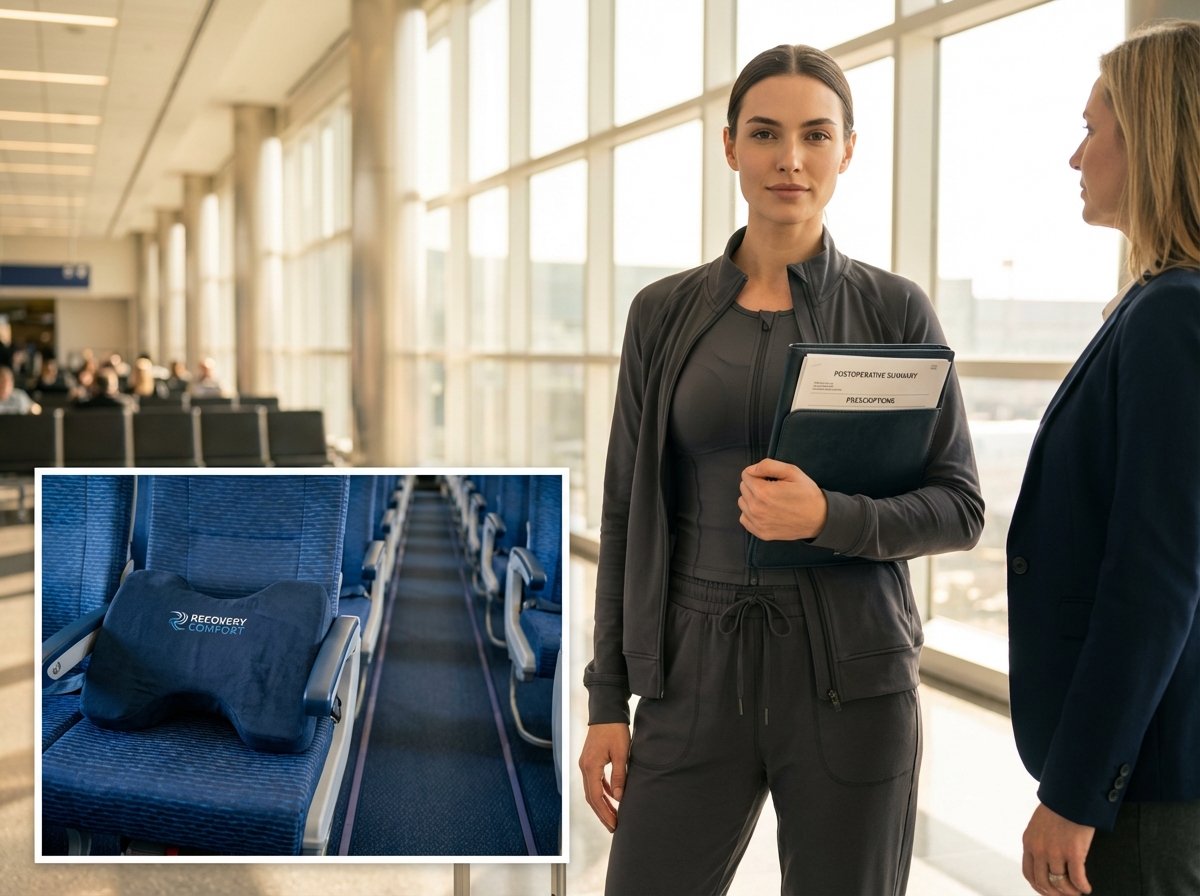
You must obtain a formal travel packet from your surgeon before you leave the clinic. This is not just a verbal okay to fly. It is a set of documents that protects you in case of an emergency. Your packet should include a written medical clearance that states you are fit for air travel. It needs to show the date of your surgery and a detailed postoperative summary. This summary should cover the intraoperative notes such as the amount of fat grafted to each side. It must also list any complications that occurred during the procedure. Having this information allows a doctor in your home country to understand exactly what happened in the operating room. You can find more about the typical BBL Recovery timeline to help you coordinate these dates. Your packet should also contain a list of every medication you were given. This includes anesthesia drugs and the prescriptions you are taking now. Make sure there is a clear emergency contact number for the surgical team that is monitored 24 hours a day.
Wound Care and Follow-Up Documentation
Discharge instructions are your roadmap for the first few weeks at home. These should be printed and kept in your carry-on bag. Do not rely on digital copies alone because phone batteries can die during long travel days. Ask your surgical team to take clear photos of your incision sites and the grafted areas before you depart. These photos serve as a baseline for your healing. If you notice redness or swelling later, you can compare the current state to these images. You also need a clear plan for follow-up care once you land in the United States. This might involve a local plastic surgeon who has agreed to see you or a structured telemedicine schedule with your original doctor. Having a local contact is vital if you experience any red flags like a fever or unusual pain. Most experts suggest a wait time of at least ten to fourteen days before you attempt a long flight home.
Securing the Right Travel Insurance
Standard travel insurance often excludes complications from elective cosmetic surgery. You need to look for specialized policies that cover medical evacuation and postoperative issues. When you apply for insurance, you must declare that you are traveling for a BBL. If you hide this fact, the insurer can deny your claims. Look for a policy that offers flexibility for changing your flight. Recovery does not always follow a perfect schedule. If your surgeon decides you need two more days of observation, you want to be able to move your flight without paying massive fees. Medical evacuation coverage is especially important if you are in a region where advanced emergency care is far from the clinic.
Packing Your Recovery Kit
Your carry-on bag should be stocked with everything you might need for the flight and the first three days at home. This ensures you are not scrambling to find a pharmacy while you are exhausted.
- A ten-day supply of all prescription medications.
- Non-narcotic pain relief options if your doctor approves them.
- Two clean compression garments to allow for washing.
- A specialized BBL pillow that meets airline size requirements (typically 16×16 inches).
- Sterile wound dressings and medical tape.
- Antiseptic wipes to clean your hands and surfaces.
- A digital thermometer to check for a fever over 100.4 degrees.
- Printed copies of your medical clearance and surgery summary.
Keep these items in a bag that is easy to reach. You should not be reaching into overhead bins or bending down to the floor repeatedly during the flight. Contact your clinician immediately if you lose your medication or medical documents during transit.
Strategic Flight Booking
The way you book your travel can significantly impact your risk of developing a blood clot. Choose direct flights whenever they are available. Every hour spent in an airport or on a plane adds to your physical exhaustion. If you must have a layover, keep it under two hours to minimize the time you spend sitting in waiting areas. Select an aisle seat so you can stand up and walk every 60 minutes. This movement is the best way to prevent deep vein thrombosis. Some airlines allow you to request preboarding if you explain you have medical needs. This gives you time to set up your BBL pillow and get settled without being jostled by other passengers. You should be aware of the added complications from traveling after a Brazilian butt lift when you are choosing your seat and airline.
Ground Transport and the Final Leg
Your planning should extend to the moment you land in your home city. Do not plan to drive yourself home from the airport. You will be tired and your mobility will be limited. Arrange for a friend or a professional service to pick you up in a large vehicle. An SUV or a van is much better than a small sedan. These larger vehicles have higher seats and more legroom. This extra space makes it easier to use your BBL pillow without hitting your head on the roof or cramping your legs. Make sure your companion knows they will need to handle all your luggage. You must avoid lifting anything heavy to prevent strain on your incisions. Having a smooth transition from the plane to your home is the final step in a successful international surgery journey.
Choosing the right BBL pillow and seating strategies for flights
The success of a Brazilian Butt Lift depends heavily on how you treat the grafted fat during the first few weeks. When you are flying home from a surgery abroad, the seat becomes your biggest challenge. The goal is to offload every ounce of pressure from the central gluteal mound. If you sit directly on the new fat cells, you risk ischemia. This is a lack of blood flow that leads to fat necrosis. Research from the Aesthetic Surgery Journal in 2024 shows that strict compliance with no-sit protocols can boost fat survival to 80 percent. Without the right support, that number can drop to 40 percent.
Specialty BBL Pillow Designs
Choosing a pillow is not just about comfort. It is about physics. Different designs offer varying levels of protection for your investment.
- Sculpted Foam Thigh Cushions
These are often the gold standard for air travel. They are made of high-density foam that does not compress under your weight. The design focuses on supporting the underside of the thighs. This allows the buttocks to hang freely off the back of the cushion. - U-Shaped Thigh Supports
These look like a large letter U. You place your legs in the channels. This design is excellent for stability. It prevents your legs from sliding outward during turbulence. - Wing-Shaped Cushions
These provide extra support for the hips. They help distribute weight across a larger surface area. This reduces the pressure on any single point of the thigh. - Inflatable Travel Pillows
These are the most portable option. You can deflate them for security checkpoints. However, they often lack the necessary firmness. They can feel bouncy or unstable. This makes it harder to maintain a safe posture for several hours. - Elevated Cushion Systems
These are thicker sets that raise you three or four inches off the seat. They ensure zero contact between the buttocks and the airplane chair. They are very effective but can be bulky to carry through an airport.
The Problem with Standard Donut Pillows
Many patients consider using a standard medical donut pillow. Clinical rationale suggests this is a mistake. Donut pillows are designed for coccyx injuries or hemorrhoids. They have a hole in the center but still apply pressure to the outer edges of the buttocks. In a BBL, fat is often grafted into those outer areas to create projection and width. A donut pillow can crush those peripheral grafts. Specialty BBL pillows are safer because they shift all the weight to the hamstrings. This keeps the entire surgical zone free from contact.
| Pillow Type | Pros for Air Travel | Cons for Air Travel |
|---|---|---|
| Firm Memory Foam | Very stable. Does not flatten. | Bulky. Takes up carry-on space. |
| Inflatable | Easy to pack. Adjustable height. | Lacks support. Can leak air. |
| Donut Cutout | Inexpensive. Easy to find. | Risks pressure on outer grafts. |
| Thigh U-Support | Best pressure redistribution. | Hard to fit in narrow seats. |
Features to Look For
When you buy a pillow, check the foam density first. It must be firm enough to support your weight without bottoming out. Look for a removable cover. Airplane seats are not the cleanest environments. A washable cover is essential for hygiene. Antimicrobial or hypoallergenic fabrics are even better for post-surgical safety. Size is another factor. Most airline seats are about 17 inches wide. Ensure your pillow is no wider than 16 inches. Stability straps are a major plus. These allow you to secure the pillow to the seat or your waist. This prevents the cushion from sliding when the plane tilts or when you shift positions.
How to Use Your Pillow on the Plane
Using the pillow correctly requires a specific technique. Place the cushion toward the front edge of the airplane seat. Sit down slowly. Ensure the back of your thighs and your ischial tuberosities are the only parts touching the foam. Your buttocks should be suspended in the air behind the pillow.
Maintain a slight forward lean. This keeps your center of gravity over your thighs. Use the footrest if the airline provides one. If not, use your carry-on bag as a footstool. Keeping your knees slightly higher than your hips helps maintain the correct angle. For a short domestic flight, this position is manageable. For long-haul international flights, you must be more diligent. You will need to adjust your position slightly every 30 minutes to prevent thigh numbness. Never lean back into the seat. If you need to rest your back, place a small rolled-up jacket behind your mid-back. This creates a gap so your lower back and buttocks do not touch the chair. If you need to sleep, use a neck pillow to maintain an upright position. Do not recline fully if it shifts weight onto the grafts.
Seating Strategies and Assistance
The physical seat environment matters as much as the pillow. Airplane armrests can be a nuisance. If you are in an aisle seat, you can often raise the armrest to give yourself more room to position the pillow. You should also pad the seatbelt. The buckle or the strap can dig into your hip incisions or grafted areas. Use a soft cloth or a small travel blanket between the belt and your body.
Do not be afraid to ask for help. Since the 2023 surge in travel awareness for BBL patients, many airline crews are familiar with these needs. You can request pre-boarding. This gives you time to set up your pillow and footrest without a crowd behind you. Tell the gate agent you have a medical condition that requires extra time to get settled. You do not have to give specific details if you prefer privacy. Just state that you have a “recent orthopedic or soft tissue surgery” that requires a specific seating setup. This usually grants you access to the early boarding groups. This is much safer than trying to balance a specialty pillow while other passengers are pushing past you in the aisle.
Car Travel to and from the Airport
The same rules apply for the car ride. Avoid small sedans with deep, bucket-style seats. These seats curve upward and will press against the sides of your buttocks even with a pillow. An SUV or a van is a better choice. The flatter seats in these vehicles work better with BBL cushions. If you are the passenger, slide the seat back as far as possible. This gives you room to extend your legs and maintain that crucial forward lean. If the trip to the airport is longer than an hour, plan for a stop. Getting out to stand for five minutes relieves the pressure on your thighs and keeps your blood moving. This coordination between your pillow, your posture, and your transport choice is what keeps those new fat cells alive during the journey home.
For more information on the risks of traveling too soon, you can read about added complications from traveling after a Brazilian butt lift from the ASPS. This will help you understand why these seating strategies are non-negotiable for your recovery.
In flight care immediate postop measures and complication planning
The flight home represents the most critical window for your recovery. You are balancing the need to protect new fat grafts with the urgent requirement to keep blood moving through your lower extremities. A standard economy seat is not just uncomfortable. It is a physiological challenge after a Brazilian Butt Lift. The combination of cabin pressure changes, immobility, and post-surgical inflammation creates a high-risk environment for deep vein thrombosis (DVT).
The In-Flight Movement Protocol
Movement is your primary defense against blood clots. You should establish a strict hourly routine that begins the moment you board. Every 60 to 90 minutes, you must stand up and walk the aisle for at least five minutes. This frequency is necessary because added complications from traveling after a Brazilian butt lift often stem from the prolonged immobility that occurs during long-haul flights. While seated, you should perform ten ankle pumps every hour. This involves flexing your feet up toward your shins and then pointing your toes downward. Additionally, you should complete twenty calf raises every thirty minutes by lifting your heels while keeping your toes on the floor. These exercises engage the calf muscles, which act as a pump to return blood to the heart.
Hydration and Chemical Stability
Hydration directly affects blood viscosity. You should aim to drink eight ounces of water for every hour you are in the air. On a four-hour flight, this means consuming at least 64 ounces of fluid. You must avoid alcohol and sedatives entirely. Alcohol dehydrates the body and expands blood vessels, which can worsen swelling. Sedatives are dangerous because they may cause you to sleep through your scheduled movement breaks. If you sleep too deeply, you might inadvertently shift your weight onto the grafted areas of your buttocks, which compromises blood flow to the new fat cells. Staying alert allows you to maintain the slight forward-lean posture required to keep pressure on your thighs rather than your glutes.
Compression and Anticoagulation
Graduated compression stockings are mandatory for flights longer than four hours. You should use stockings with a compression level of 15 to 20 mmHg. These should be put on before you arrive at the airport and worn for the duration of the travel day. For patients with a BMI over 30 or those who underwent extensive liposuction, surgeons often prescribe pharmacologic prophylaxis. This typically involves a low molecular weight heparin like Enoxaparin. A common dose is 40mg injected subcutaneously once daily for seven to ten days post-op. You must follow your surgeon’s specific guidance on this medication. It is a powerful tool for preventing pulmonary embolisms in high-risk patients. Contact your clinician immediately if you experience sudden shortness of breath or chest pain, as these are signs of a pulmonary embolism.
Medication Planning and Wound Care
Managing pain and nausea requires a proactive approach. You should take your prescribed pain medication thirty minutes before boarding to ensure it is active during the most stressful parts of the trip. Always carry your original prescriptions and a signed letter from your doctor explaining why you have these medications. This prevents delays at security checkpoints. Nausea is a common side effect of both anesthesia and narcotics. You should have a fast-acting anti-nausea medication like Zofran (4mg) readily available. Every two hours, you should discreetly check your compression garment and any visible dressings. You are looking for excessive drainage or signs that the garment is bunching, which can create pressure points on the grafts. If your hands or feet turn blue or feel numb while wearing the garment, it may be too tight and require adjustment.
Identifying Medical Red Flags
You must be able to distinguish between normal post-operative discomfort and a medical emergency. If you experience any of the following symptoms, you should notify the flight crew immediately. They have protocols for medical emergencies and can coordinate with ground-based medical consultants.
| Symptom | Potential Concern | Required Action |
|---|---|---|
| Sudden shortness of breath | Pulmonary Embolism | Emergency medical attention |
| Chest pain or rapid heart rate | Cardiac stress or clot | Notify flight crew immediately |
| Fever over 101°F | Systemic Infection | Contact surgeon upon landing |
| Uncontrolled swelling in one leg | Deep Vein Thrombosis | Seek urgent care at arrival |
| Confusion or fainting | Fat Embolism or Shock | Immediate hospitalization |
Contingency Planning for Travel
Traveling for surgery means you are away from your primary care network. You must carry a physical folder containing your operative report, the anesthesia record, and a full list of medications administered during your stay. This folder should also include high-resolution photos of your incision sites from the day of discharge. If you need to visit an urgent care center in your arrival city, these documents provide the local doctor with the context they need to treat you safely. You can use apps like Zocdoc to find providers in the United States who can see you on short notice. Ensure you have your surgeon’s 24/7 contact information, such as a WhatsApp number, saved in your phone and written on a piece of paper in your wallet.
Strategic Seating and Packing
Your seat selection is a medical decision. An aisle seat is non-negotiable because it allows you to stand up without disturbing other passengers. This removes the psychological barrier to frequent movement. Bulkhead seats are ideal because they offer extra legroom for stretching. If you are flying more than five hours, upgrading to premium economy is a wise investment. These seats typically offer a 38-inch pitch compared to the 31-inch pitch found in standard economy. This extra space makes it easier to position your BBL pillow and maintain a safe sitting angle. When packing, ensure your BBL pillow meets airline carry-on size limits, which are usually around 16 by 16 inches. You should also pack a small, soft cloth to pad your seatbelt so it does not dig into your hip incisions.
Final conclusions and next steps for safe recovery and travel
The journey toward a successful Brazilian Butt Lift does not end when you leave the operating room. It actually enters its most critical phase during the flight home. Success depends on how well you protect the newly grafted fat cells while managing the physical toll of air travel. The final steps of your recovery require a shift from passive healing to active management. You must prioritize the survival of the fat grafts. You must also minimize the risk of vascular complications like deep vein thrombosis. This final stage is about precision. It is about following a strict protocol that leaves no room for error.
Timing and Medical Clearance
The most important factor in your travel plan is the timeline. You cannot rush the biological process of fat integration. Most surgeons require a minimum of 7 to 10 days before they even consider clearing a patient for a flight. This window allows the initial inflammatory response to peak and begin to subside. If you are traveling a long distance, such as a flight over six hours, waiting four to six weeks is the safest choice. This is because prolonged immobility significantly increases the risk of blood clots. You must obtain a formal medical clearance document from your surgeon. This document should state that you are fit to fly. It should also include details about your surgery and any medications you are taking. Never board a plane if you have active drains or if you are experiencing unexplained pain. Your health is more important than your original travel date.
The Role of Specialized Pillows
Protecting your results means keeping all weight off the buttocks. A standard travel pillow or a simple donut cushion is often insufficient. You need a BBL-specific pillow designed to support your thighs. These pillows redistribute your body weight to the hamstrings. This prevents ischemia, which is a lack of blood flow to the grafted fat. If the fat cells are compressed, they will die. This leads to fat necrosis or a loss of volume. A high-quality memory foam pillow with a non-slip base is ideal for airplane seats. It should be firm enough to keep your buttocks elevated at least two inches above the seat surface. Ensure your pillow fits within the airline’s carry-on dimensions. Most cushions are roughly 16 by 16 inches. Using this tool correctly can improve your fat survival rate by 20 percent compared to patients who do not follow a strict no-sit protocol.
Movement and Circulation Strategies
Flying after surgery puts you at a higher risk for deep vein thrombosis. The risk doubles on flights longer than four hours. You must be proactive about circulation. An aisle seat is a requirement for your safety. It allows you to stand up and walk every 60 to 90 minutes. While seated, you should perform calf raises and foot pumps. Aim for twenty repetitions every half hour. These movements act as a pump for your veins. They help move blood back toward your heart. Compression stockings are another essential tool. You should wear medical-grade stockings with 15 to 20 mmHg of pressure. These should be put on before you arrive at the airport. They help prevent fluid from pooling in your lower legs. This is especially important because cabin pressure changes can increase swelling throughout your body.
Hydration and Medication Management
Staying hydrated is a simple but vital part of preventing clots. You should drink at least eight ounces of water for every hour you are in the air. Avoid caffeine. Avoid alcohol. These substances dehydrate you and can interfere with your recovery. You must also have a clear plan for your medications. Keep all prescriptions in your carry-on bag. Do not put them in checked luggage. If your surgeon has prescribed blood thinners like Enoxaparin, ensure you know how to administer them. You should also carry a supply of anti-nausea medication. Turbulence or the stress of travel can trigger stomach upset. This can be dangerous if it leads to straining or dehydration.
The Preflight Checklist
Preparation reduces the stress of travel. Having everything organized allows you to focus on your physical well-being. Use this list to ensure you are ready for the flight home.
| Category | Essential Items and Actions |
|---|---|
| Documentation | Medical clearance letter. Operative report. Anesthesia records. Emergency contact list. |
| Medications | Pain relief. Antibiotics. Blood thinners. Anti-nausea meds. Ten-day supply. |
| Equipment | BBL thigh pillow. Two compression garments. Compression stockings. |
| Health Monitoring | Digital thermometer. Antiseptic wipes. Clean wound dressings. |
| Travel Logistics | Aisle seat confirmation. Travel insurance with complication coverage. Ground transport with space to lie down. |
Planning for Potential Complications
You must have a plan for the unexpected. This is especially true when you have had surgery abroad. Identify the nearest hospital to your home that can handle plastic surgery complications. Keep your surgeon’s contact information easily accessible. Many clinics now use WhatsApp for 24-hour support. If you experience shortness of breath, chest pain, or extreme swelling in one leg, seek emergency care immediately. These are red flags for a pulmonary embolism or a blood clot. Do not wait until you land to report these symptoms to the flight crew. They are trained to handle medical emergencies and can coordinate with ground medical teams.
Next Steps After You Land
Your recovery continues once you arrive home. You should schedule a follow-up appointment with a local plastic surgeon or a wound care specialist within seven days. This ensures that a professional can monitor your healing progress. You may also need to continue lymphatic drainage massages. These help reduce swelling and prevent the formation of scar tissue. Continue wearing your compression garment 24 hours a day for at least six weeks. Avoid sitting directly on your buttocks for the first eight weeks. This includes driving. If you must drive, use your BBL pillow for short trips only. Long drives should be avoided until you are fully cleared by your medical team.
Final Thoughts on Safety
The desire to return to your normal life is strong. However, your safety must come first. A Brazilian Butt Lift is a major surgical procedure. It requires a significant investment of time and money. Do not jeopardize your results or your life by rushing the travel process. If you feel unwell or if your surgeon expresses any concern, reschedule your flight. The cost of a new plane ticket is small compared to the cost of treating a serious complication. Plan carefully. Move often. Protect your grafts. By following these steps, you can ensure that your journey home is as successful as your surgery. You have worked hard for your new look. Now you must work just as hard to keep it safe.
References
- Added complications from traveling after a Brazilian butt lift | ASPS — Although these videos of the popular fat grafting procedure have millions of views, they often don't show the dangers of traveling after such …
- How to Fly After BBL: Your Complete Guide to Safe Air Travel Post … — Most surgeons recommend waiting at least 10-14 days before flying, though some may clear patients as early as 7-10 days post-operation. This waiting period …
- BBL Recovery : Complete Timeline, Tips 2025 – Carely Clinic — Most surgeons require 7-10 days minimum before flying after BBL. … Carely Clinic's standard protocol includes 7-night stay (1 hospital + 6 hotel nights) …
- What to Wear on Plane After BBL? | Snatched Plastic Surgery — After a BBL, we recommend wearing loose-fitting, breathable clothing on planes to minimize pressure on grafted areas, which is crucial to prevent compromising …
- Is buttock augmentation safe? 7 Powerful Facts for 2025 — Brazilian Butt Lift (BBL): 9.9% overall complication rate, 97.1% patient satisfaction ; Buttock Implants: 21.6% complication rate, but no rupture …
- Brazilian Butt Lift Statistics 2025 – Centre for Surgery — How Long Does a BBL Procedure Take to Perform? How Long is BBL Recovery? How Long Does a BBL Last? When Can You Sit After a Brazilian Butt Lift?
- Skinny BBL Abroad – Top Clinics, 2025 Prices & Results – Flymedi — Initial recovery takes about 2 to 6 weeks. You will need to wear a compression garment for up to 6 weeks. Most patients can return to desk work in about two …
- Top Cosmetic Procedures People Are Traveling for in 2025 — 6. Brazilian Butt Lift (BBL) — and Reversals. Though BBLs remain popular, a noticeable trend is rising in BBL reversals — with patients seeking …
- Why Having BBL Abroad Might Be a Bad Idea – Cadogan Clinic — Patients who have BBL surgery abroad may not receive comprehensive aftercare following their surgery, and may return to the UK within a few days …
- BBL 2025: The Complete Guide to a Safe and Natural Transformation — Yes the BBL procedure is safe in 2025 when performed by a board certified experienced surgeon in an accredited facility strictly adhering to the …
Legal Disclaimers & Brand Notices
The information provided in this article, including discussions on the Brazilian Butt Lift (BBL) procedure, surgical recovery protocols, and potential medical complications such as deep vein thrombosis (DVT) or pulmonary embolism, is for informational and educational purposes only. This content does not constitute professional medical advice, diagnosis, or treatment. Always seek the advice of a board-certified plastic surgeon or other qualified health provider with any questions you may have regarding a medical condition or surgical aftercare. Never disregard professional medical advice or delay in seeking it because of something you have read in this article.
All product names, logos, brands, and registered trademarks mentioned in this text are the property of their respective owners. All company, product, and service names used in this website are for identification purposes only. Use of these names, trademarks, and brands does not imply endorsement.