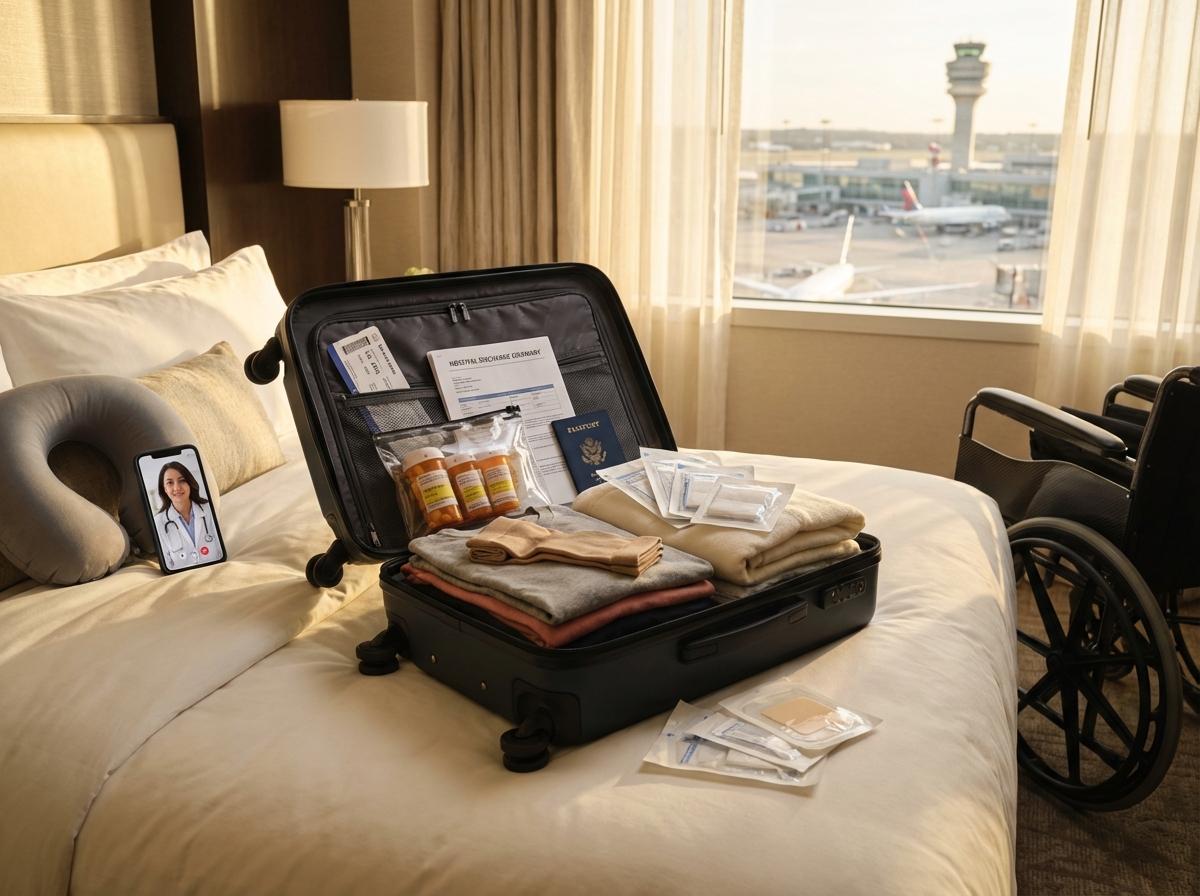
Traveling home after surgery abroad requires careful packing and planning to protect your recovery. This guide walks you through the essential documents, medications, wound care supplies, mobility aids, travel logistics and complication planning you need to safely return to the United States and continue aftercare seamlessly.
Pre Travel Planning and Essential Documentation
The process of leaving a surgical facility abroad involves much more than just booking a flight. You must secure a formal medical clearance to fly from your surgeon before you even consider heading to the airport. This document is a mandatory part of your post surgery travel documents. It confirms that you have met the necessary recovery milestones to handle the physical stress of air travel. Airlines have the right to refuse passengers who appear unstable or recently operated upon. Having this letter prevents you from being stranded at the gate. It also provides a vital roadmap for any medical professional who might need to assist you during your journey. A written clearance ensures that everyone involved in your transport knows you are fit for the environment of a pressurized cabin.
The Essential Document Checklist
Your surgery recovery packing list must prioritize a comprehensive folder of medical records. This folder should contain your full discharge summary. This document outlines your admission and the course of your stay. You also need the operative report. It provides a technical description of the procedure performed. The anesthesia record is equally important. It lists every medication and dosage used during your surgery, along with the direct contact information for the anesthesiologist. This information is vital if you experience a delayed reaction or need emergency care in the future. If your procedure involved any hardware, you must carry the implant records. This includes serial numbers and manufacturer details for items like joint replacements or pacemakers. You can find more details on specific items in this guide on What to Pack for Your U.S. Joint Replacement Surgery. Pathology reports are necessary if any biopsies were taken. You should also have a complete medication list. Use generic names for all drugs. Brand names often differ between the United States and other countries. This ensures that local pharmacists or doctors can identify exactly what you are taking. Include a list of contact information for your surgeon and the local clinic. You should also have the details for your primary care physician at home. Carry your travel insurance policy and medical evacuation details. These documents must be easily accessible. If you are traveling from a region with specific health requirements, keep your vaccination or screening records ready.
Sample Surgeon Clearance Letter
A proper clearance letter should be concise and professional. It needs to be on the official letterhead of the clinic or hospital. You can use the following structure as a guide for what your surgeon should provide.
Medical Travel Clearance
Patient Name [Full Name]
Date of Birth [Date]
Date of Surgery [Date]
Procedure Performed [Type of Surgery]
Current Medical Status [Stable and fit for air travel]
Travel Restrictions [No lifting over ten pounds and requires extra legroom]
Recommended Travel Date [Date]
Monitoring Instructions [Monitor for swelling or fever]
Physician Contact [Phone Number and Email]
Surgeon Signature [Signature and Stamp]
Organizing Your Records
Organizing these documents requires a multi layered approach. Keep physical copies in a dedicated folder in your carry-on bag. Do not place these in checked luggage because bags can go missing. Create digital versions of every page. Use an encrypted USB drive for sensitive data. Store backups on a secure cloud service. This allows you to access your records from a smartphone or a computer anywhere in the world. Having both formats protects you against loss or theft. It also makes it easier to share information with your doctors once you return home. Digital copies are especially useful for long term storage and quick reference during follow up appointments.
Navigating TSA and Customs
When you arrive at the airport, you may need to present these records to TSA or customs officials. Be prepared to show your medical clearance to fly if you are using a wheelchair or carrying medical supplies. If you have internal metal, inform the security agent before you enter the scanner. Presenting your implant card can speed up the screening process. Stay calm and have your folder ready. You do not need to volunteer every detail of your surgery. Only provide the specific documents requested by the officers. Being proactive and organized prevents long delays and unnecessary stress during your travel home after surgery abroad.
Translation and Financial Records
Translation is a critical step if your surgery was in a country where English is not the primary language. You must obtain certified translations for all major documents. Medical terminology is precise. A poor translation can lead to dangerous misunderstandings during follow up care. Ensure the translator is familiar with medical jargon to maintain accuracy. Additionally, keep every receipt and invoice from your medical journey. These are not just for your personal records. You will need them for insurance claims and potential tax deductions. Some countries also require proof of payment for visa compliance. Keeping a detailed financial log ensures you are not left with unexpected costs later. These records prove the necessity of your travel and the nature of the treatment received. Proper documentation is the foundation of a safe and successful recovery journey.
Medications Prescriptions and How to Carry Them Safely
Managing your prescriptions is the most critical part of your recovery journey when traveling home. You need a clear plan for every pill and injection before you leave the hospital. Start by creating a master medication list. This document should include the brand name and the generic name of every drug. Write down the exact dosage and the specific time of day you need to take it. Having this on paper helps if you are groggy from surgery or if a doctor at home needs to review your care. You should keep a digital copy on your phone and a physical copy in your wallet.
Packing a Surplus Supply
Pack a surplus of your medications. Aim for an extra 14 day supply beyond your expected travel dates. Flights get delayed and weather changes. You do not want to be stuck in an airport without your blood thinners or pain relief. Keep everything in the original pharmacy containers. These bottles have your name and the doctor name on the label. This is vital for security checks and customs. It proves the medicine belongs to you and was legally prescribed. Do not move pills into small plastic bags to save space. This can lead to confiscation at international borders. If you are looking for more tips on what to bring, you can check this guide on What to Pack for Your U.S. Joint Replacement Surgery for ideas on pain relief and comfort.
Handling Controlled Substances
Traveling with controlled substances like opioids requires extra steps. Many countries have strict laws about carrying narcotics. You must have a formal letter from your surgeon. This letter should state your medical condition and the necessity of the medication. It should also list the quantity you are carrying. If you are carrying anticoagulants to prevent blood clots, keep the prescription handy. These are essential for medication continuity after overseas surgery. Make sure the letter is signed and on official hospital letterhead. If you are traveling from a country where English is not the primary language, get a certified translation of this letter. This prevents delays at customs or with airline staff who may question your supplies.
Temperature Sensitive Medications and Liquids
If you use insulin or biologics, you need to think about temperature. These drugs often need to stay cold. Use a medical grade cooling bag with FAA approved gel packs. Do not use loose ice because it will melt and cause a mess at security. Tell the TSA officer that you have refrigerated medications. They are used to seeing these items. Keep these medications in your carry on bag. The cargo hold of a plane can freeze or overheat, which ruins the medicine. Check the temperature requirements for your specific biologics before you leave the clinic. Some can stay at room temperature for a short time, but others will fail if they get too warm.
TSA Meds Rules and Security
TSA meds rules allow you to carry larger amounts of liquid medication than the standard 3.4 ounce limit. You must declare these at the security checkpoint for manual inspection. You can also carry used and unused syringes if you have the injectable medication with you. It is helpful to keep a copy of your prescription with your supplies. When you land in the USA, you might need to declare your medications to customs. Usually, personal supplies for 90 days are acceptable if you have the right paperwork. Be prepared to show your doctor letter if an agent asks about your travel with medication after surgery. Never put your essential medications in checked luggage. Bags get lost or delayed, and you cannot risk being without your recovery meds.
| Medication Category | Required Documentation | Storage Requirement |
|---|---|---|
| Opioids and Narcotics | Surgeon Letter and Original Label | Carry-on Only |
| Anticoagulants | Prescription and Dosage Schedule | Carry-on Only |
| Insulin and Biologics | Medical ID and Prescription | Cooling Case with Gel Packs |
| Liquid Medications | Declaration at Security | Clear Plastic Bag |
Organizing Your Schedule
Organizing your daily routine helps prevent mistakes. A pill organizer is great for daily use, but do not put all your pills in it before you fly. Keep the bulk of your meds in their original bottles for the flight. Fill the organizer once you reach your hotel or home. Use a digital alarm on your phone to stay on schedule. This ensures you do not miss a dose of antibiotics or pain meds. If you are crossing time zones, talk to your surgeon about how to adjust your schedule. You may need to slowly shift your doses to match the new time zone without missing a window of protection.
Managing Refills Abroad
Sometimes things go wrong and you might run out of a prescription. If this happens, call your home pharmacy first. They might be able to coordinate with an international pharmacy chain. Mailing medications across borders is complicated and often illegal for individuals. It is better to have your surgeon write a prescription that can be filled at a local clinic in your destination before you fly home. Note that most pharmacies in the United States cannot fill a prescription written by a doctor in another country. Therefore, you should ask your surgeon for a supply that will last until you can see your local physician. Large chains in the USA often have partnerships with international groups. This can make getting an emergency refill easier if you have your original bottle and a copy of the prescription.
OTC Items and Supplements to Avoid
Be careful with over the counter items and supplements. Many people take Vitamin E or garlic supplements, but these can increase bleeding risks. St. John’s Wort can interfere with anesthesia. Always confirm with your surgeon before taking anything new. Even common items like aspirin or ibuprofen might be restricted if you are on specific blood thinners. Some herbal teas can also interact with your recovery meds. Stick to the list provided by your surgical team. If you feel a headache or minor pain, ask your doctor which OTC brand is safe for you. This prevents dangerous interactions with the carrying opioids and anticoagulants you were given for recovery.
Wound Care Supplies Dressings and Infection Prevention
Managing an incision while moving through airports or sitting on a long flight requires a dedicated wound care travel kit. You should not rely on finding these items at a local pharmacy in a foreign country or even at a small airport shop. Your kit must be organized and accessible to ensure the healing process remains uninterrupted during your journey.
Sterile Gauze and Non Stick Pads
Pack plenty of individual sterile gauze sponges. These are essential for absorbing any minor drainage that might occur during the pressure changes of a flight. Non stick pads are better for the actual incision site because they will not pull on healing tissue or staples when you remove them. Having a variety of sizes allows you to adapt to different levels of drainage or changes in the wound area.
Saline for Irrigation
Buy pre filled sterile saline pods or small bottles. These are used to gently rinse the wound if it becomes contaminated. Do not use tap water or bottled drinking water to clean a surgical site. Sterile saline ensures you are not introducing new bacteria into the area. If you are flying, keep these in your carry on but ensure they are within the liquid limits or declared as medical necessities.
Transparent Film Dressings and Tape
Transparent dressings like Tegaderm are helpful because they allow you to see the wound without removing the bandage. They also provide a waterproof barrier which is useful in humid environments. Bring medical grade adhesive tape for securing secondary dressings. Paper tape is usually gentler on skin that might be sensitive from surgical prep solutions used in the operating room.
Sterile Scissors and Tweezers
Keep a pair of small sterile scissors in your checked luggage for cutting tape or gauze. If you must have them in your carry on, ensure they meet security size requirements. You might also need sterile tweezers for removing small bits of debris or adjusting a dressing without touching it with your fingers. Keeping these tools clean is just as important as the dressings themselves.
Drain and Specialized Care
If your procedure involves JP drains or hemovacs, you must know how to care for drains while traveling. Pack extra drainage bulbs and sterile measuring cups. You should empty the bulbs as close to your departure time as possible and record the output in your recovery log. Secure the bulbs to your clothing using safety pins or a soft belt to prevent them from pulling on your skin or catching on armrests. Bring alcohol swabs to clean the exit ports every time you empty the fluid. For those with negative pressure wound therapy, carry extra canisters and backup batteries. Ostomy users should pack twice the amount of wafers and pouches they expect to use to account for any travel delays.
Antiseptics and Antibiotic Stewardship
Only use antiseptics like chlorhexidine or povidone iodine wipes if your surgeon specifically instructed you to do so. Overusing these can sometimes slow down the healing of healthy tissue. The same rule applies to topical antibiotics. Use them only as prescribed. Antibiotic stewardship is vital to prevent resistant bacteria. Never start a course of leftover oral antibiotics without a direct order from your medical team even if you suspect a minor issue.
How to Pack for Sterility
Place all sterile items in a clean waterproof bag inside your luggage. Keep a smaller version of this kit in your carry on bag. This ensures you can handle a leaking dressing or a loose bandage in an airplane bathroom without digging through the overhead bin. Use clear bags so security can see the contents without touching the sterile packaging. This organization prevents contamination from other items in your suitcase.
Digital Wound Photo Protocol
Telemedicine is your lifeline when you are miles away from the clinic. To get an accurate assessment, you need high quality photos. Use natural light but avoid direct harsh sunlight. Hold a clean ruler or a coin next to the wound to provide a sense of scale. Take photos from a direct overhead angle and a side profile. This helps the surgeon see the height of any swelling or the depth of a contour change during your virtual follow up.
Monitoring Post Surgery Infection Signs
You must stay vigilant for post surgery infection signs during your journey home. Redness that spreads away from the incision line is a major red flag. Watch for increasing pain that does not respond to your medication. A fever over 101 degrees Fahrenheit requires immediate attention. Foul smelling drainage or thick yellow pus is never normal. If you notice these symptoms, contact your surgeon immediately and seek local medical care if you are still in transit.
Guidance for Immunocompromised Patients
Patients with weakened immune systems face higher risks. You should be even more diligent about hand hygiene before touching any dressings. Wear a high quality mask in crowded terminals to avoid secondary respiratory infections that could stress your recovery. Change your dressings exactly as scheduled to keep the bacterial load as low as possible. Your body has fewer resources to fight off environmental pathogens during travel.
Hand Hygiene During Transit
Traveling involves touching many public surfaces like tray tables and door handles. You must wash your hands thoroughly with soap and water for at least twenty seconds before you touch your wound care travel kit. If soap is not available, use a hand sanitizer with at least sixty percent alcohol. Never touch the side of the gauze that will come into contact with your skin. This simple step is the most effective way to prevent a hospital acquired infection from following you home.
Home Preparation
Having the right post-surgery medical supplies you need at home is just as important as what you carry on the plane. Ensure your home recovery station is stocked with the same sterile basics you used during travel. This consistency helps maintain the healing environment your surgeon created. Set up your home space before you leave for surgery so it is ready the moment you walk through the door.
Comfort Mobility and Safety Aids for the Journey Home
Sitting for long periods after a procedure is a significant challenge for the body. You need specific travel after surgery comfort items to manage pain and maintain proper posture during the trip home. An inflatable lumbar cushion provides essential back support without taking up much space in your luggage. You can adjust the firmness to suit your comfort level. A wedge pillow is another vital tool if your surgeon instructed you to keep your upper body or legs elevated. These are available in inflatable versions that fold flat for packing. Neck pillows help you stay upright and prevent your head from lolling. This reduces strain on your neck and shoulders. If you had surgery on your abdomen or chest, a seat belt extender is a necessary safety item. It prevents the belt from pressing against your incisions. You should obtain a letter from your doctor to explain the medical necessity of this device to flight attendants.
Managing Circulation and DVT Risks
Deep Vein Thrombosis Prevention
Blood clots are a serious concern when flying after a major operation. You must wear compression socks for flying to help blood move from your lower legs back to your heart. Choose graduated compression stockings that offer a pressure level of 15 to 20 mmHg. It is important to get the right size. Measure the circumference of your ankle and the widest part of your calf before you buy them. Stockings that are too tight can actually restrict blood flow. You should also practice ankle pumps every hour while seated. This involves pointing your toes toward the floor and then pulling them back toward your shins. This movement acts as a natural pump for your veins. Stay hydrated by drinking plenty of water throughout the flight. Avoid caffeine and alcohol. These substances can dehydrate you and increase the risk of clots. Your surgeon might also prescribe medication prophylaxis. This could include low dose aspirin or an injectable blood thinner. Follow the dosage schedule exactly as prescribed by your medical team.
Navigating the Airport with Ease
Wheelchair Assistance at Airport
Walking through a large international terminal is often impossible during early recovery. You should arrange for wheelchair assistance at airport at least 48 hours before your flight. You can do this through the airline website or mobile app. Use the specific industry codes to get the right level of help. WCHR is for passengers who can walk but cannot manage long distances. WCHS is for those who cannot climb stairs. WCHC is for passengers who are completely immobile. The staff will meet you at the curb or the check-in desk. They will navigate you through security and take you directly to your gate. This service also grants you pre-boarding privileges. This allows you to get settled in your seat without being bumped by other passengers. If you use a folding cane or crutches, these are allowed in the cabin. They do not count toward your carry-on bag limit. A travel wheelchair can be checked at the gate. This ensures it is waiting for you the moment you exit the aircraft.
Clothing and Footwear Choices
Your outfit for the journey should prioritize ease of movement. Choose loose garments that feature front-opening buttons or zippers. This is much easier than trying to pull a shirt over your head when your range of motion is limited. You can find more details in this Hospital Bag Checklist for Plastic Surgery. Pack at least one spare set of compression garments in your carry-on bag. This is helpful if your primary set becomes soiled or uncomfortable. Choose shoes that are easy to slip on. They should have a sturdy non-slip sole to prevent falls. Non-slip socks are a great alternative for the actual flight. They keep your feet warm while providing grip if you need to stand up. Wear skin-friendly underwear made of soft cotton. This prevents irritation or chafing near your surgical sites. Avoid any clothing with tight waistbands or restrictive elastic.
Packing Strategy and Medical Devices
Keep all your mobility aids and comfort items in your carry-on luggage. Checked bags can be delayed or lost. You need your pillows and stockings with you at all times. A portable footrest is a great addition to your carry-on. It helps keep your legs elevated in economy seating to reduce swelling. You should also review this guide on What to Pack for Your U.S. Joint Replacement Surgery for more specific ideas. If you require personal medical devices like CPAP machines or heart monitors, notify your airline at least 48 hours in advance. Bring the user manual and a doctor’s note explaining the necessity. These items typically do not count toward your carry-on baggage limit, but you should verify power requirements with the airline’s medical department.
Travel Logistics Medical Evacuation and Follow Up Planning
Planning your return journey requires more than just booking a ticket. You need a strategy for safe travel home after surgery abroad. The most important factor is the timing of your flight. You must wait for your surgeon to give you the official clearance. For minor procedures like small cosmetic tweaks or simple biopsies, surgeons often suggest waiting three to five days. Major surgeries such as joint replacements or abdominal work usually require a stay of ten to fourteen days before you can fly safely. These timeframes allow the initial risk of blood clots or wound opening to decrease. You should never pressure a doctor to sign off early. Flying too soon against medical advice could void your travel insurance coverage. If the surgeon says you are not ready, you stay put.
Ground transport is a better choice if your destination is within a few hours of the clinic. Avoiding the cabin pressure changes of an airplane can reduce swelling. If you do choose a car, you must plan for stops every hour. You need to get out and move to keep your blood flowing. If you are traveling a long distance, a train might be more comfortable than a car. Trains allow you to walk around more freely during the trip. You should weigh these options based on your specific surgery and the total travel time.
Coordinating Your Arrival and Care
You cannot simply land at the airport and figure things out. You need a plan for the moment you touch down. Arrange for a family member to meet you at the gate. If your surgery was very complex, you might need an ambulance or a specialized transport service to take you home. Some patients choose to hire a home nurse for the first few days. This professional can help with wound care. They can monitor your vitals. Other patients prefer to book a stay at a short term rehab facility. This is a smart move if you live alone or have stairs that you cannot climb yet. You should have all these medical supplies ready at your house before you even leave for your trip. You can find a list of what you might need here Post-Surgery Medical Supplies You Need at Home. Having these items waiting for you prevents stress on your first night back.
Scheduling your follow up care is another task for your pre-travel checklist. You should arrange a telemedicine follow up after surgery with your operating surgeon. Set this appointment for forty eight hours after you arrive home. This allows you to discuss any issues that came up during the flight. You also need to see your local primary care physician. Call them before you leave the country. Make sure they have an opening in their calendar for a week after your return. They will be the ones managing your long term recovery and checking your incisions in person.
Medical Evacuation and Insurance
Standard travel insurance is rarely enough for surgical patients. You need specific medical evacuation insurance. This policy covers the cost of flying you home in a medical jet if a complication occurs. These flights can cost over one hundred thousand dollars. When you pick a policy, confirm the coverage limits. Look for “bed to bed” service. This means the insurance company handles everything from the hospital bed abroad to the hospital bed at home. You should check if the policy covers pre-existing conditions related to your surgery. Many do not. You must read the fine print carefully.
Keep an emergency contact card in your wallet. This card should have your policy number. It should have the twenty four hour phone number to activate an evacuation. If you have a crisis, you or your companion must call this number immediately. Do not wait for the local hospital to do it. The insurance company must authorize the transport before it happens. If you pay out of pocket first, they might not reimburse you. You should also have a copy of this card in your carry on bag.
Mid Transit Emergencies
If an emergency happens while you are traveling, you must act fast. If you are on a plane and develop a fever, chills, dizziness, or extreme heat, notify the flight attendants immediately. These can be signs of a post-operative infection or a blood clot. The crew can provide fluids, assist with monitoring your condition, and contact medical professionals on the ground. If you are in an airport, find the airport medical clinic. You should have a list of local hospitals in your layover cities. Use your phone to save the local emergency number for every country you pass through. US citizens can contact the nearest US Embassy for help. The embassy can assist with finding local doctors or communicating with your family. They do not pay for your medical bills, but they can help you navigate a foreign healthcare system during a crisis. Keep your surgeon’s emergency number on speed dial. They know your case best and can give advice to local doctors over the phone.
Final Takeaways and Actionable Checklist
The success of your surgery abroad depends heavily on the logistics of your return. You need a plan that accounts for physical limitations and potential delays. Preparation reduces stress. It lowers the risk of post-operative complications during transit. The transition from a clinical setting to a home environment is the most vulnerable phase of recovery. You must minimize friction at every step.
The Five Non-Negotiable Essentials
Surgeon Clearance and Medical Documents
You must have a signed Fit to Fly certificate from your surgeon. This document confirms you are stable enough for air travel. Keep a physical folder with your operative report and discharge summary. Digital copies are good backups. Physical papers are faster at security or in emergencies. You should also keep a list of the specific procedural codes used during your operation. This helps US doctors understand exactly what was done if you need local care.
Two Week Medication Supply
Carry at least fourteen days of all prescribed medications. This includes painkillers, antibiotics, and blood thinners. Keep these in original bottles with clear labels. Bring paper copies of every prescription. This avoids issues at customs. It also helps if you need a local refill. Do not pack these in checked luggage. Keep them in your carry on bag at all times. You might experience travel delays that extend your trip beyond the expected duration.
Wound Care Kit and Sterile Dressings
Pack a dedicated bag with extra gauze, medical tape, and antiseptic wipes. You might need to change a dressing in an airport bathroom or a hotel room. Include sterile gloves and a small bottle of hand sanitizer. This prevents infection during these changes. Having your own supplies ensures you do not have to search for a pharmacy while in pain. You can find more details on specific items in this guide to Post-Surgery Medical Supplies You Need at Home.
Mobility Aids and Compression Stockings
Travel involves long periods of sitting. This increases blood clot risks. Wear medical grade compression stockings as directed by your doctor. Bring any walking aids like a cane or collapsible walker. A travel pillow or lumbar support helps maintain proper posture during the flight. These items are part of a standard packing list for surgery recovery. They make the difference between a painful journey and a manageable one.
Medical Insurance and Evacuation Details
Verify that your policy covers international complications. Keep the contact number for your medical evacuation provider on your person. This ensures you can get professional help if a serious issue arises before you reach your home physician. Carry your insurance card and a list of emergency contacts. Include the phone number for the international patient coordinator at the hospital where you had your surgery.
Timeline Checklist for a Safe Return
One Week Before Travel
Confirm your flight details. Request airport wheelchair assistance through the airline website. Fill all prescriptions at a local pharmacy near your recovery site. Verify that your home caregiver is ready for your arrival. Organize your surgery recovery checklist to ensure nothing is missed. Check the weather at your destination to pack appropriate loose clothing.
48 Hours Before Departure
Attend your final face to face follow up with the surgical team. Secure your official medical release forms and imaging results. Test your compression garments for proper fit. Pack your essentials into an accessible carry on bag. Confirm your transportation to the airport. Ensure the vehicle has enough space for you to sit comfortably without straining your incisions.
Day of Travel
Take your scheduled pain medication before heading to the airport. Wear loose clothing that does not press against incision sites. Arrive early to avoid rushing. Keep your travel home after surgery checklist handy for quick reference. Stay hydrated but avoid caffeine which can increase heart rate and anxiety.
During the Journey
Perform ankle pumps and leg stretches every hour while seated. Drink plenty of water to support circulation. Notify flight attendants if you feel sudden pain or shortness of breath. Keep your medication and documents within reach under the seat. Do not attempt to lift heavy carry on bags into the overhead bin. Ask for help from staff or fellow travelers.
First 72 Hours at Home
Schedule a check in call with your primary care doctor in the US. Monitor your temperature twice daily to watch for signs of infection. Keep your surgical site clean and dry according to discharge orders. Limit physical activity to short walks around the house. Rest is your priority during this window. Avoid the temptation to catch up on household chores immediately.
Final Safety Reminders
Watch for Complications
Seek immediate medical attention if you experience calf pain, chest pain, or sudden swelling. These can be signs of deep vein thrombosis or a pulmonary embolism. Fever or foul smelling discharge from the wound also requires an urgent evaluation. Do not wait for your scheduled follow up if you feel something is wrong. Trust your instincts regarding your body.
Continuity of Care
Your recovery does not end when the plane lands. Share your foreign medical records with your local providers immediately. This ensures they have the context needed to manage your long term healing. It also helps with any necessary physical therapy. Reliable information transfer is the best way to prevent gaps in your treatment plan. Keep all receipts and medical notes for your permanent health record.
Sources
- What to Pack for Your U.S. Joint Replacement Surgery — For a comfortable and safe trip home after surgery, you should bring loose clothing, pain relief medications, a travel pillow, and ice packs.
- What to Pack for Short-Term Rehab After Surgery – ArchCare — Personal Care and Comfort Items · Hairbrush or comb · Travel-sized shampoo, conditioner, or lotions (if you prefer specific products) · Daily hygiene essentials.
- Post-Surgery Medical Supplies You Need at Home — This comprehensive guide explores the essential medical supplies needed for effective home recovery after surgery, organized by recovery need and surgical type.
- FTM Top Surgery Pre-Op Shopping & Packing Checklist — This handy checklist of medical supplies, convenience items, supplements and more will help you get organized for your recovery.
- Hospital Bag Checklist for Plastic Surgery | The Aesthetic Society — Hospital Bag Checklist: What To Pack For The Hospital or Plastic Surgery Recovery Center ; ID, registration forms, insurance card. · Medications (and their …
- Upcoming Surgery? Don't Forget To Pack These Items — The Must Haves · Hair brush or comb · Sanitary napkins if needed · A toothbrush, toothpaste and dental floss · Deodorant · Eyeglasses (generally they …
- Pack the Perfect Hospital Bag: Essentials for Every Stay — What to Bring, What to Skip and How to Stay Comfortable ; Photo ID; Health insurance card; Medicare card ; Travel-sized: · Lip balm; Feminine hygiene products …
Legal Disclaimers & Brand Notices
The information provided in this article is for informational and educational purposes only and does not constitute professional medical advice, diagnosis, or treatment. Always seek the advice of your physician or other qualified health provider with any questions you may have regarding a medical condition, surgical recovery, or travel safety following a medical procedure. Never disregard professional medical advice or delay in seeking it because of something you have read in this content.
All product names, logos, brands, and trademarks mentioned or cited within this article are the property of their respective owners. All company, product, and service names used in this website are for identification purposes only. Use of these names, logos, and brands does not imply endorsement or affiliation.